
How to Use Digital Ads to Attract Right-Fit Families (Not Just More Leads)
Independent schools often measure the success of a digital ad campaign the same way they measure almost everything else in marketing: volume.
How many impressions did we get? How many clicks? How many inquiries came in this month?
These numbers feel reassuring. They look like progress. But enrollment directors know a harder truth—that a full pipeline of inquiries doesn't always translate into enrolled families. And that the families who do inquire aren't always the ones who feel like a natural fit.
The problem isn't usually the platform, or the targeting, or even the budget. The problem is that most schools are optimizing for quantity rather than alignment.
The Real Cost of the Wrong Leads
Before we talk about how to attract right-fit families, it's worth pausing on what the wrong leads actually cost.
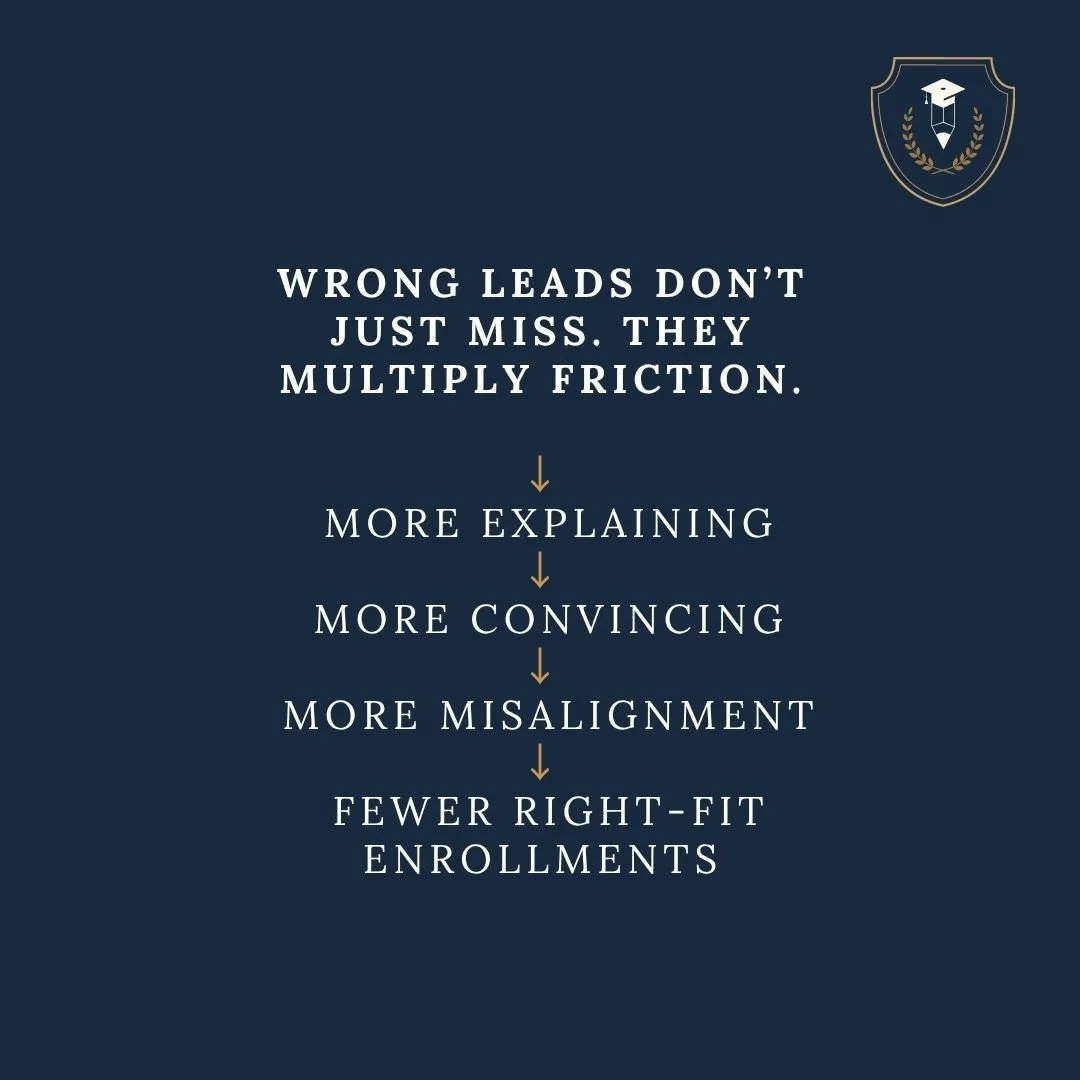
When families arrive misaligned (meaning they weren't drawn in by a clear, honest picture of your school, but by a generic message that could have applied anywhere), the entire enrollment process becomes more laborious.
Admissions teams spend time explaining basic philosophy to families who aren't sure they share it. Tours become sales pitches instead of confirmations. Conversations that should feel easy start with friction. And at the end of all of it, families sometimes choose to go elsewhere—not because something went wrong, but because the fit was never really there.
What "Right-Fit" Actually Means
Right-fit doesn't mean perfect families or guaranteed enrollments. It means families who arrive having already recognized themselves in your school's story.
They've seen your ads, felt something resonate, and thought this might be us. They show up to a tour already curious about the right things. They ask questions that reveal they understand what you value. They've done the emotional work of alignment before they ever walk through your door.
Getting to that moment is the real job of digital advertising, and it requires a fundamentally different approach than most schools are currently taking.
Why Most School Ads Attract the Wrong Attention
Most independent school ads are designed to cast the widest possible net. They emphasize:
Broad, credential-heavy messaging that sounds impressive but feels generic
Language that's been refined so many times it no longer says anything specific
Calls to action that skip the relationship entirely and jump straight to Apply Now
The intent is to appeal to as many families as possible. But when an ad sounds like every other school's ad, it doesn't attract your families. It attracts whoever happens to click.
The Shift: From Reach to Recognition
Right-fit advertising isn't about reaching more people. It's about creating moments of recognition for the right people.
Recognition sounds like: That's exactly what I want for my child.
It's the moment a parent stops scrolling because something in an ad feels true—not impressive, not polished, but true. That moment of recognition is what separates a lead that converts from a lead that quietly disappears.
And recognition doesn't come from features. It comes from story.
When an ad communicates what it feels like to be a student at your school—what your teachers actually believe about learning, what your community values in a child, what growth looks like in your environment—you stop competing on credentials. You start competing on fit. And fit is a competition you can win.
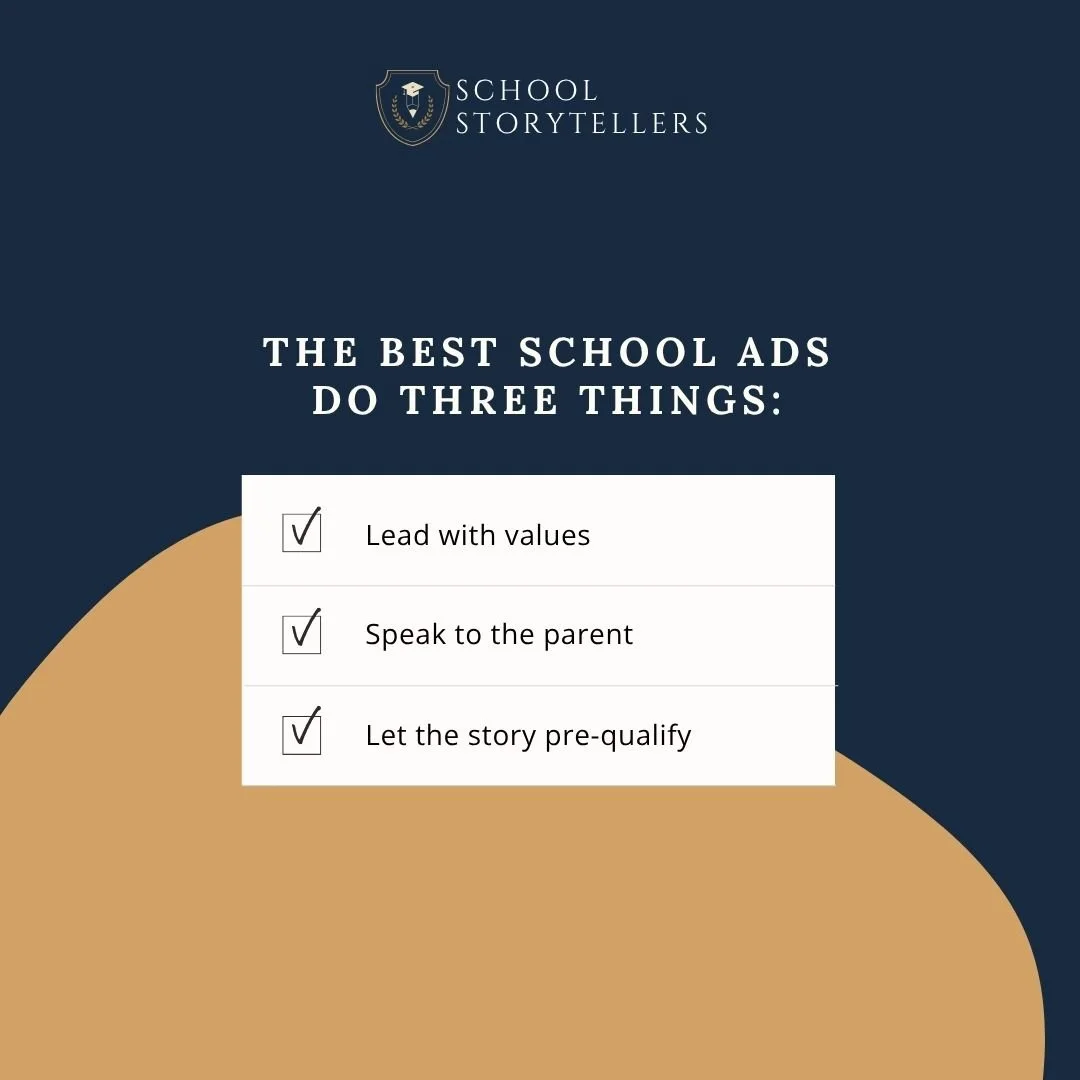
Three Principles of Right-Fit Digital Advertising
1. Lead with values, not accolades.
Families don't need to know your test scores to feel connected to your school. They need to know what you believe. Ads that lead with the why behind the work—why your teachers teach the way they do, why your community structures itself the way it does, why a certain kind of student thrives in your environment—attract families who share those beliefs.
2. Speak to the parent, not the institution.
Every ad is read through the lens of a parent's deepest hopes and fears for their child. Will my child be seen here? Will they be challenged in the right way? Will this place understand who they are becoming? Ads that answer these questions land differently from ads that describe what a school has. Address the parents' emotional reality, and your message will earn the attention it needs.
3. Let the story do the pre-qualifying work.
One of the most underappreciated benefits of story-driven advertising is what it does before a family ever inquires. When your ads clearly reflect your values, your culture, and the kind of student who thrives in your environment, families do their own quiet screening. The families who reach out are already closer to yes—and the families who aren't a fit have already moved on.
What This Looks Like in Practice
Right-fit advertising doesn't require a larger budget. It requires a clearer story.
It means being willing to say something specific—about the kind of learner you serve, about the philosophy that shapes your school, about what you believe is worth protecting in a child's education. It means trusting that the families who recognize themselves in that story are the ones worth reaching.
In practice, it looks like:
Ad creative that reflects real moments, real values, and real language rather than polished brand statements
Messaging that invites reflection rather than demanding immediate action
A consistent story across brand ads and event ads, so that every touchpoint reinforces the same picture
Landing page experiences that continue the narrative rather than abandoning it for a generic form
Redefining Success
If you measure success by lead volume alone, story-driven advertising might feel disappointing at first. The numbers may not spike.
But look closer.
Are families arriving better prepared?
Are admissions conversations going deeper, faster?
Are more inquiries converting to tours—and more tours converting to applications?
Are enrolled families more confident and committed?
Those shifts are far more meaningful than raw impression numbers.
The goal of digital advertising isn't a full inbox. It's a room full of families who already feel at home.
At School Storytellers, we help independent schools clarify their story and translate it into high-performing digital ad campaigns that attract dream families. If this sounds like the missing link in YOUR school marketing strategy,schedule your free consultation with Emily & Janet.