Why Explaining Your School Matters More Than Promoting It
When families begin researching schools, they are not looking for marketing.
They are looking for understanding.
They want to know how a school thinks about children, learning, growth, and decision-making — often long before they are ready to inquire or attend a tour.
This is why educational content from Heads of School, division leaders, and teachers has become one of the most valuable top-of-funnel assets schools have.
Top of funnel has changed
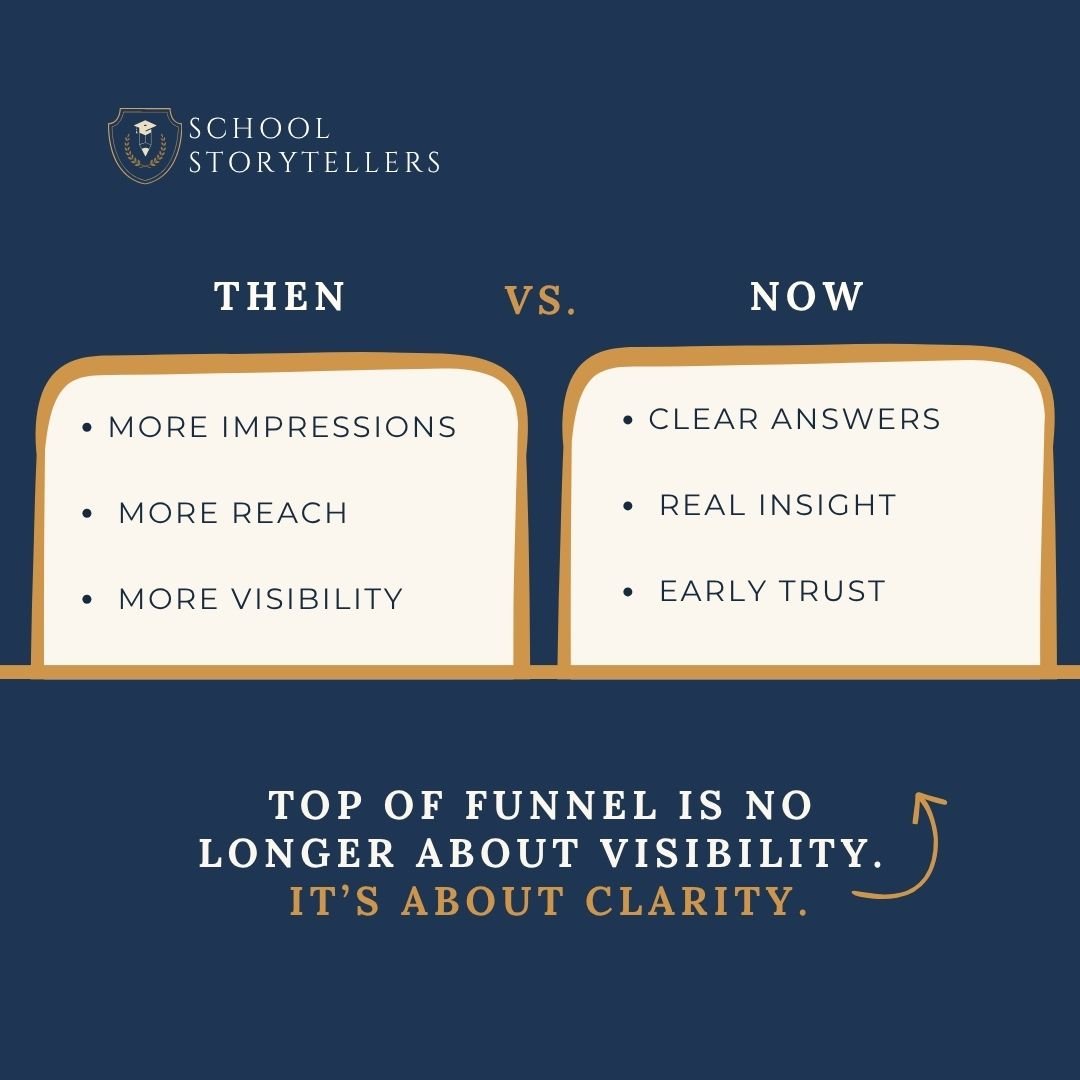
Traditionally, top-of-funnel marketing focused on awareness: more impressions, more reach, more visibility.
Today, platforms like Google and Meta prioritize authority and clarity over volume. Families are encountering schools through search results, AI summaries, and social content that answers questions — not through polished promotional messaging alone.
At this stage, families are asking:
How does this school approach learning?
What do educators value?
Would my child be understood here?
Educational content answers these questions earlier and more effectively than brand messaging ever could.
Why educator voices carry more weight
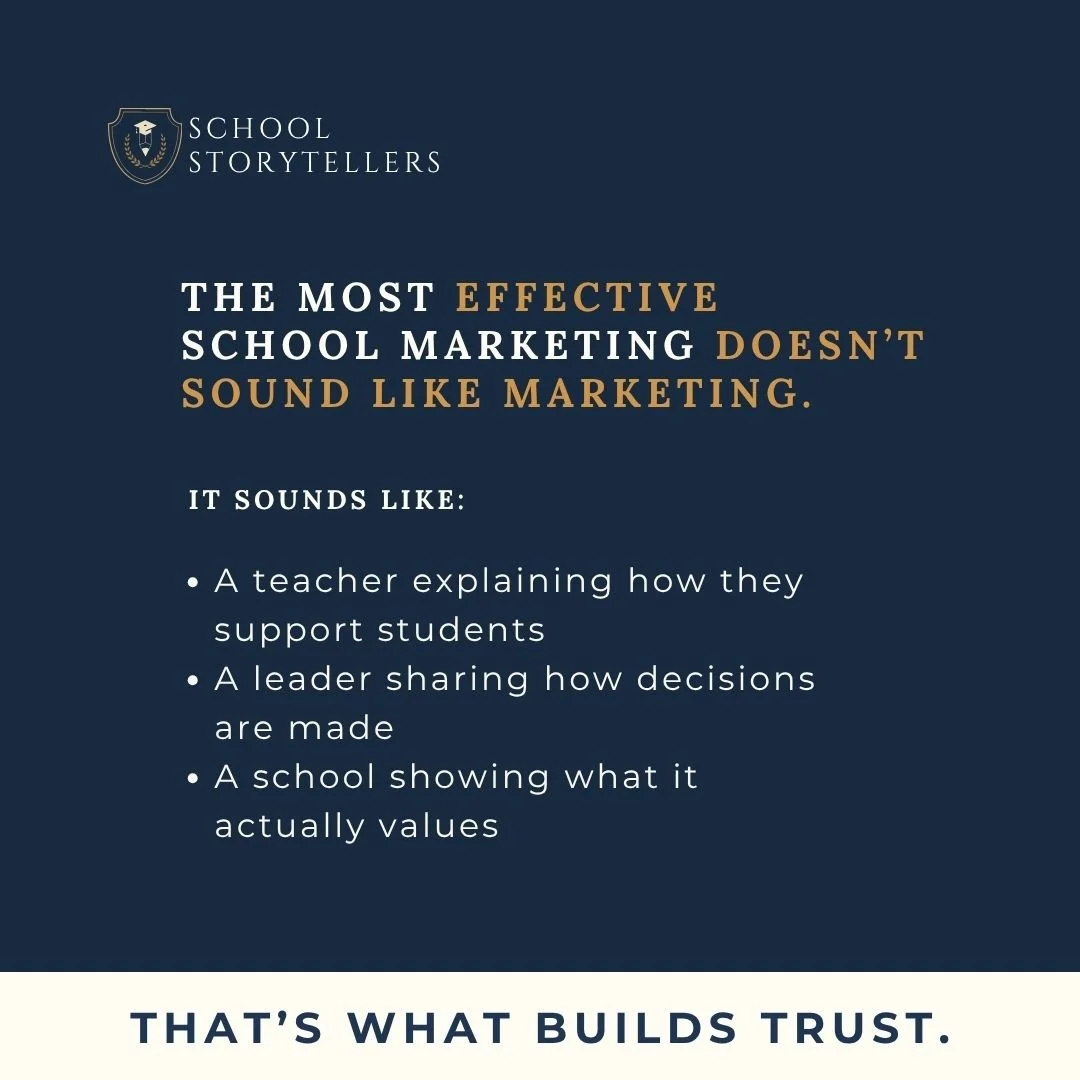
Content created by school leaders and teachers signals experience and expertise — two things both families and platforms trust.
When a Head of School explains how decisions are made, or a teacher explains how they support different learners, families gain insight into:
Educational philosophy
School culture
Alignment with their child’s needs
This type of content does not feel like marketing because it isn’t. It is teaching — and it establishes credibility before any call to action appears.
Platforms reward explanation, not promotion
Google increasingly surfaces content that explains concepts clearly and demonstrates firsthand expertise. Meta’s ad delivery systems now favor content that drives sustained engagement rather than short-term clicks.
Educational content does both:
It keeps families engaged longer
It encourages thoughtful interaction
It creates context before inquiry
From a digital marketing perspective, this content performs better not because it is optimized, but because it is trusted.
Educational content improves lead quality
Families who engage with educational content behave differently once they enter the admissions process.
They tend to:
Ask more informed questions
Move through the funnel more intentionally
Self-select based on fit, not pressure
This is why we view educational content as a top-of-funnel asset, not a communications extra. When amplified thoughtfully through search and social ads, it helps schools attract families who are already oriented — which makes lead tracking and evaluation more meaningful.
This is not about creating more content
Most schools already have the expertise families want. The opportunity is not to produce more, but to surface it more clearly.
Educational content can take many forms:
A Head of School explaining the school’s approach to growth
A teacher describing how learning differences are supported
A division leader outlining what readiness looks like
When schools lead with education rather than promotion, they build trust earlier — and that trust compounds throughout the enrollment journey.
> insert examples of head of school ads from sst here.
A quieter, stronger top of funnel
Top-of-funnel success today is not measured by how many people see a message, but by how well families understand a school before they engage.
Educational content from school leaders does that work better than any headline ever could.
At School Storytellers, we help independent schools clarify their story and translate it into high-performing digital ad campaigns that attract dream families. If this sounds like the missing link in YOUR school marketing strategy, schedule your free consultation with Emily & Janet.