How Schools Can Show Up in Google’s AI Summaries (Without Becoming a Marketing School)
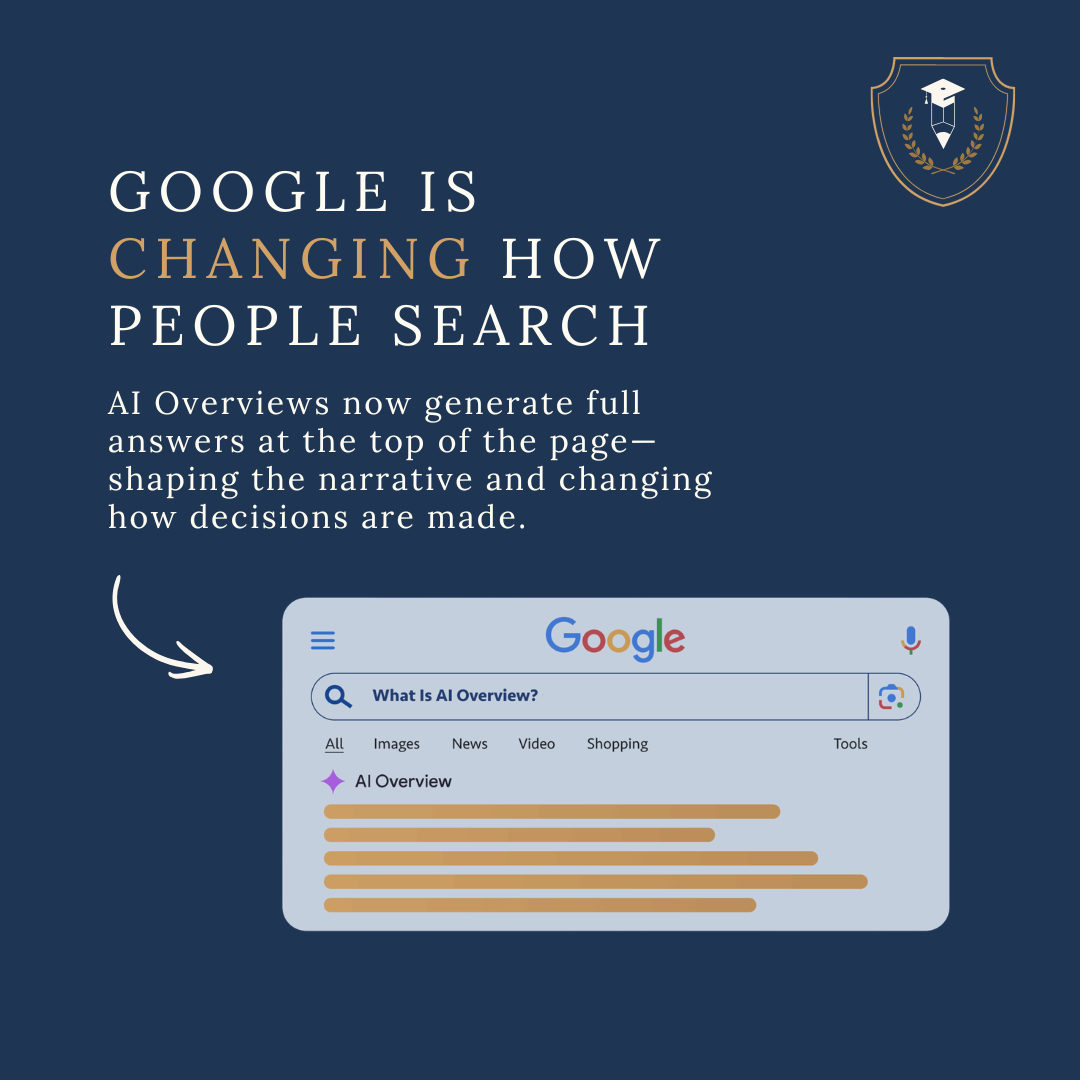
If you’ve searched for schools recently, you may have noticed something new at the top of Google: short AI-generated summaries answering parent questions before any links appear.
This change matters for schools because these summaries now shape how families understand private education before they ever visit a website or schedule a tour.
The good news: schools don’t need to chase trends or write like marketers to be included. They simply need to answer parent questions clearly and directly.
What Google’s AI Is Looking For
Google’s AI summaries pull from pages that do three things well:
Answer a real parent question clearly
Use straightforward language
Provide trustworthy, specific information
In other words, the same qualities schools value in good teaching.
Where Schools Are Most Likely to Appear
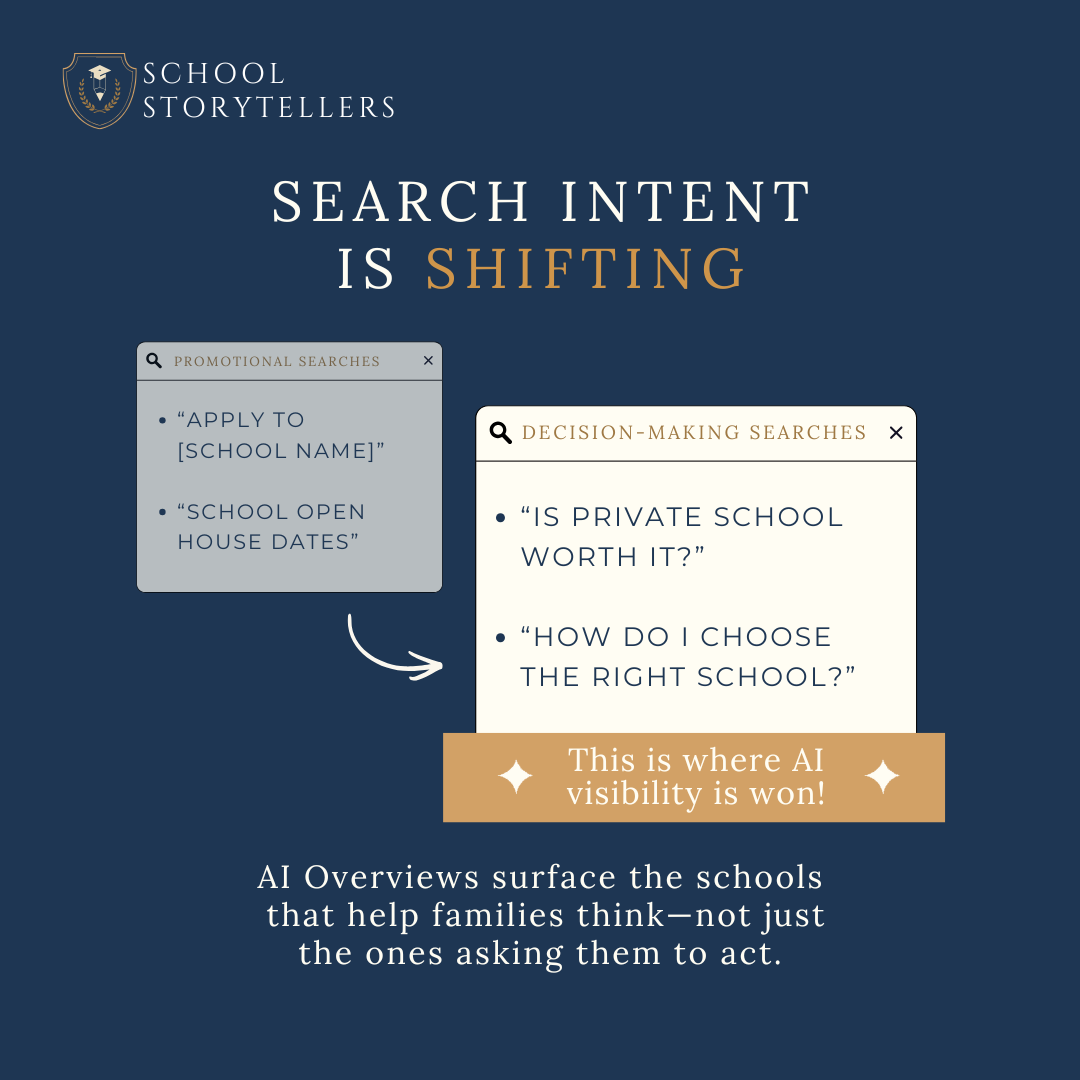
AI summaries most often appear for questions parents ask during the research phase, such as:
Is private school worth it?
How is private school different from public school?
What is an Episcopal (or Montessori, Quaker, IB) education?
How do I choose the right school for my child?
These are not promotional searches. They are decision-making questions.
Schools that help parents think clearly at this stage are the ones being surfaced.
A Simple Blog Format That Works
Schools do not need more “news” posts. They need clear explainer pages. Here is a format that works consistently.
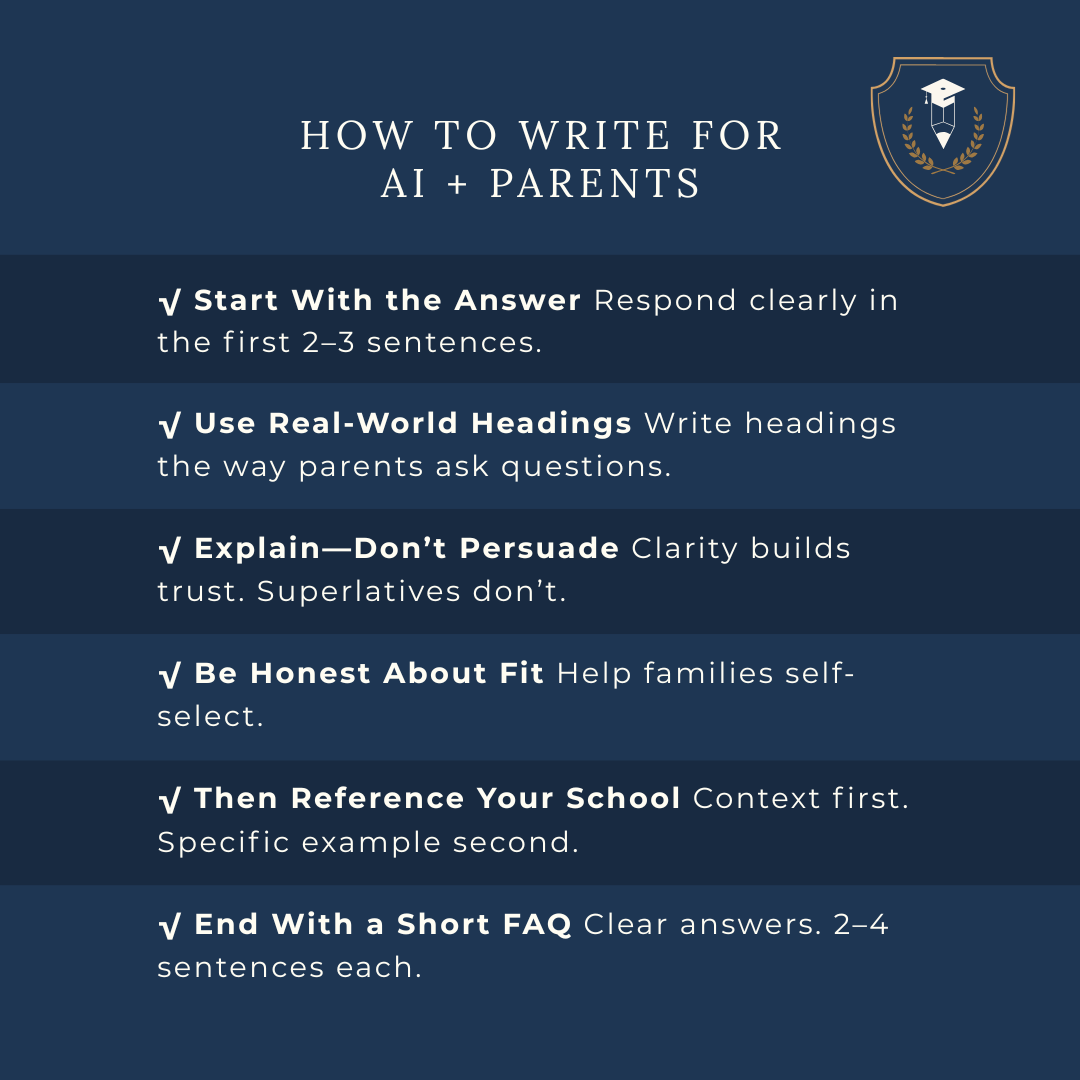
1. Start with a direct answer
Open the post by answering the question in two or three sentences.
For example:
Private schools typically offer smaller class sizes and more individualized instruction than public schools, though they come at a higher cost. For many families, whether private school is “worth it” depends on a child’s learning needs and the type of environment in which they thrive.
This is not marketing copy. It is clarity.
2. Use plain, literal headings
Headings should sound like how parents actually ask questions:
How private schools differ from public schools
Class size and individual attention
Cost and financial aid
School culture and values
Avoid poetic or aspirational language in headings. Clarity matters more than creativity here.
3. Explain, don’t persuade
Each section should briefly explain how something works, not why your school is “best.”
Short paragraphs. Specific examples. No superlatives.
For example:
Many private schools maintain smaller class sizes, which allows teachers to track student progress closely and adjust instruction as needed.
That kind of sentence builds trust.
4. Be honest about fit
Parents trust schools more when they are transparent.
Including a short section like this is powerful:
This type of school may be a good fit for children who benefit from close relationships with teachers and a structured learning environment. It may not be the right fit for every family, particularly those seeking a very large or highly standardized setting.
This helps families self-select before reaching out.
5. Add a brief school-specific example
Only after explaining the broader concept should the post reference your school.
For example:
At Christ Episcopal School, these principles are reflected in small class sizes, an emphasis on character development, and a curriculum that balances academic rigor with community values.
Specific and grounded is enough.
6. Include a short FAQ section
Answering common questions directly improves clarity for parents and helps Google understand your content.
Examples:
Do families need to be Episcopalian?
Does the school offer financial aid?
What grades does the school serve?
Each answer should be two to four sentences.
Why This Matters for Schools
When your school appears in an AI summary:
Families encounter your values and language earlier
Parents arrive more informed and aligned
Admissions conversations start at a higher level
This is not about marketing more. It is about educating families before the first conversation.
A Practical Next Step
Every school could benefit from having 3–5 clear explainer posts that answer the questions families are already asking:
Is this type of school right for my child?
How does this compare to other options?
What should we consider before applying?
These posts support admissions while answering common parents’ questions.
Ultimately, this shift is not about changing how schools operate or communicate. It is about making sure the clarity, care, and thoughtfulness already present in our schools are visible to families earlier in their search. When schools explain themselves well, families are better equipped to make informed, confident decisions.
At School Storytellers, we help independent schools clarify their story and translate it into high-performing digital ad campaigns that attract dream families. If this sounds like the missing link in YOUR school marketing strategy, schedule your free consultation with Emily & Janet.