Why Clear Lead Tracking Matters for Your School’s Enrollment Marketing
In a recent post, we talked about what a “good lead” actually looks like in independent school marketing — and why lead quality shows up in behavior, not volume.
The natural next question is one many of you are already asking:
How do we track that quality in a way that actually supports enrollment decisions?
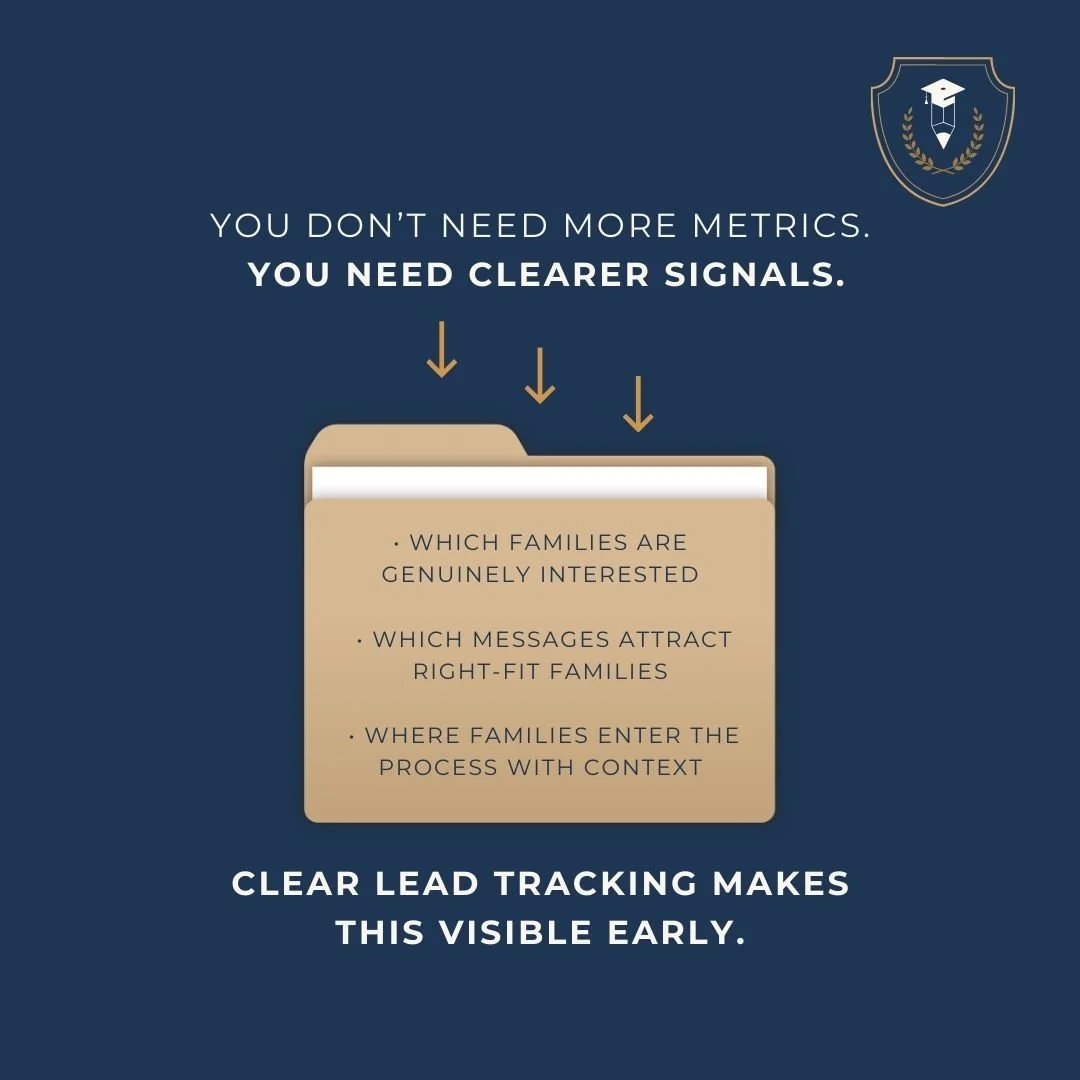
You don’t need more data — you need clearer signals
Most schools already have access to plenty of metrics. What’s often missing is a clear way to interpret them.
Clicks, impressions, and platform reports can show activity, but they don’t always help you answer the questions that matter most:
Which families are genuinely interested?
Which messages attract right-fit families?
Where are families entering the process with context — and where are they not?
Clear lead tracking exists to answer those questions early, not after application season is underway.
A lead should mean the same thing everywhere
Families don’t experience your school as “Meta traffic” or “Google traffic.” They experience your school as a set of ideas, values, and educational priorities.
For that reason, a lead should be defined consistently — no matter where a family first encounters you.
Rather than relying on different platform definitions, we focus on identifying a shared moment of intent: when a family takes a meaningful step that signals genuine interest in learning more.
When that definition is clear, comparing performance across platforms becomes far more straightforward.
Why this matters before application season
By the time applications open, you should already have insight into:
Which messages resonate with right-fit families
Which campaigns lead to deeper engagement
Where families hesitate or disengage
If lead quality only becomes visible once inquiries increase, you’re forced to react under pressure. Clear tracking allows you to adjust earlier — and more calmly.
Tracking should support your admissions team, not complicate their work
Lead tracking is not about adding complexity or monitoring every interaction.
At its best, it gives your admissions team:
A clearer sense of where families are coming from
Better context for conversations
Confidence in how marketing efforts support enrollment goals
When marketing and admissions share the same definition of a lead, conversations become more productive and expectations more aligned.
Connecting tracking to lead quality
As we shared in our earlier post, families who engage with educational and story-driven content behave differently throughout the admissions process.
You’ll often see:
More informed questions
Clearer expectations
Greater alignment with your school’s approach
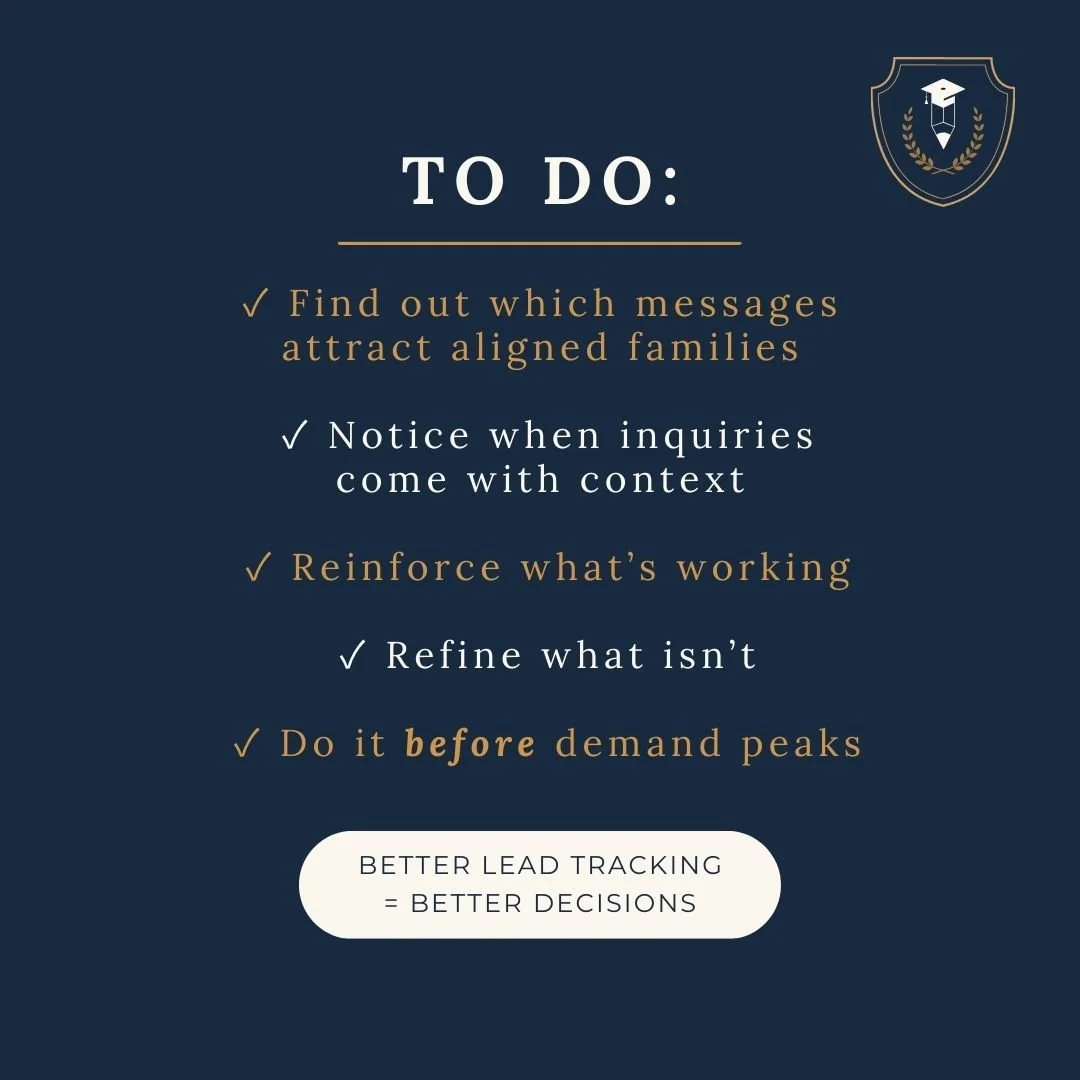
Tracking these patterns allows you to reinforce what’s working — and refine what isn’t — before demand peaks.
A steadier foundation for decision-making
Clear lead tracking doesn’t just improve reporting. It improves confidence.
It allows you to evaluate your enrollment marketing based on alignment and momentum, not surface-level activity — and to make decisions with a clearer understanding of what’s driving interest.
In practice
Evaluate your marketing at the point of intent, not at the point of exposure.
That distinction makes all the difference.
At School Storytellers, we help independent schools clarify their story and translate it into high-performing digital ad campaigns that attract dream families. If this sounds like the missing link in YOUR school marketing strategy, schedule your free consultation with Emily & Janet.