What “A Good Lead” Actually Looks Like in Independent School Marketing
In independent school marketing, it’s easy to focus on lead volume. More inquiries often feel like progress.
But not all leads are equal — and schools usually feel the difference long before the data reflects it.
A “good” lead is not defined by how quickly it arrives. It’s defined by how a family behaves once they engage.
Not all interest is the same
Families enter the admissions funnel at very different stages of readiness.
Some are early in their research, gathering context and vocabulary. Others are actively comparing schools and timelines. A smaller group is ready to apply.
Treating all inquiries as equal obscures what’s actually happening — and often leads schools to believe marketing is either “working” or “not working,” without much nuance.
Good lead strategy starts with understanding intent, not volume.
Quality shows up in behavior, not numbers
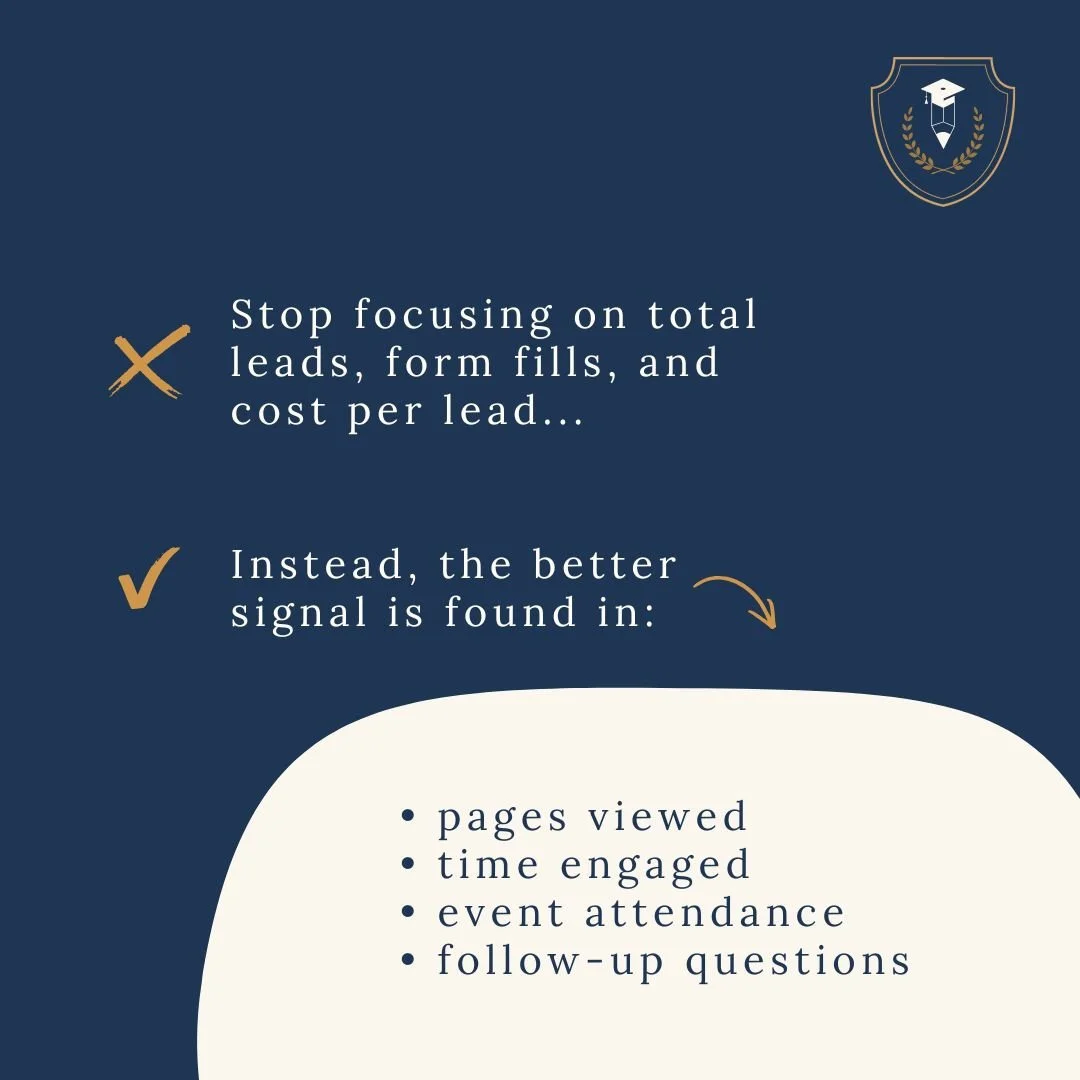
A high-quality lead often reveals itself through actions, not form fills.
For example:
Time spent engaging with admissions content
Visits to multiple pages before inquiring
Attendance at open houses or events
Follow-up questions that reflect understanding of the school’s approach
These signals indicate alignment and readiness. They also suggest that a family has encountered meaningful context before raising their hand.
Volume alone can’t tell you this. Behavior can.
Why this matters before application season
Application season compresses timelines and increases pressure. If schools wait until that moment to evaluate lead quality, it’s already too late to adjust strategy.
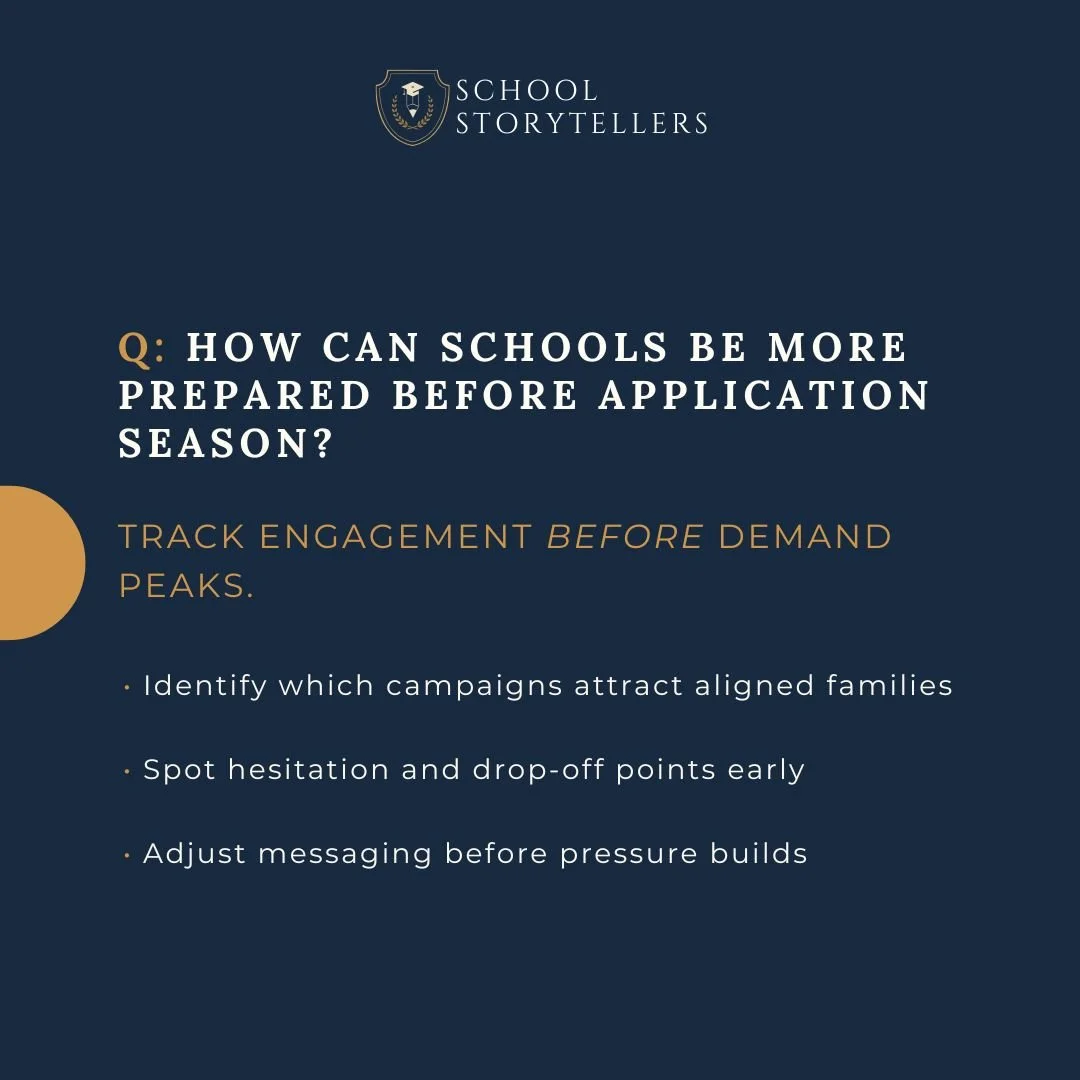
Tracking how families engage earlier in the funnel allows schools to:
Identify which campaigns attract aligned families
Understand where families hesitate or drop off
Adjust messaging before demand peaks
This is less about optimization and more about preparedness.
What tracking should actually support
Lead tracking is not about collecting more data for its own sake. It’s about giving admissions teams clearer insight into how families arrive — and why.
When tracking is aligned with enrollment goals, it helps schools:
Focus time on families most likely to convert
Align marketing and admissions expectations
Evaluate success based on momentum, not noise
This becomes especially important as platforms rely on broader performance signals and families encounter schools earlier in their research process.
Tracking from digital ads to inquiries becomes even more so important.
A better question to ask
Instead of asking, “How many leads did we get?”
A more useful question is, “Which leads moved forward — and what did they engage with first?”
That question opens the door to better campaigns, clearer messaging, and stronger alignment between marketing and admissions.
Looking ahead
As schools continue to invest in digital marketing, the conversation will increasingly shift from volume to quality — and from clicks to context.
Understanding what a “good lead” looks like is the foundation for building funnels that reflect how families actually decide and deciding on a clear metric to help move digital campaigns forward.